
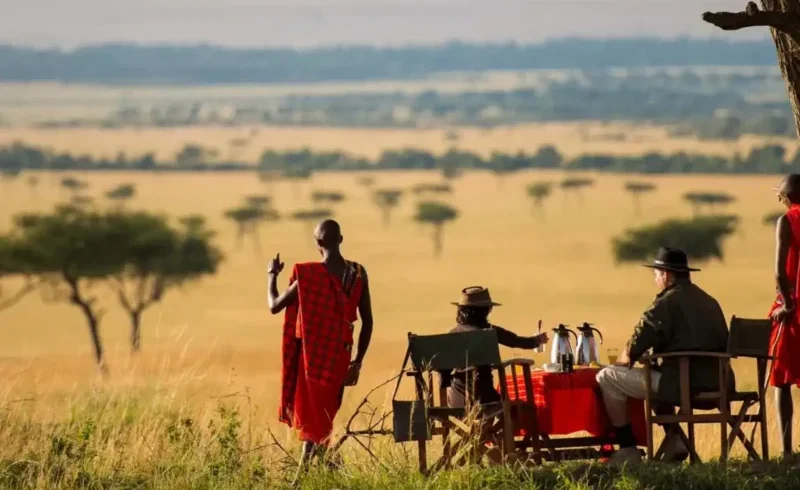
Four-day classic Masai Mara safari with three full game-drive days in Kenya's flagship Big Five reserve. The original African safari, executed perfectly.

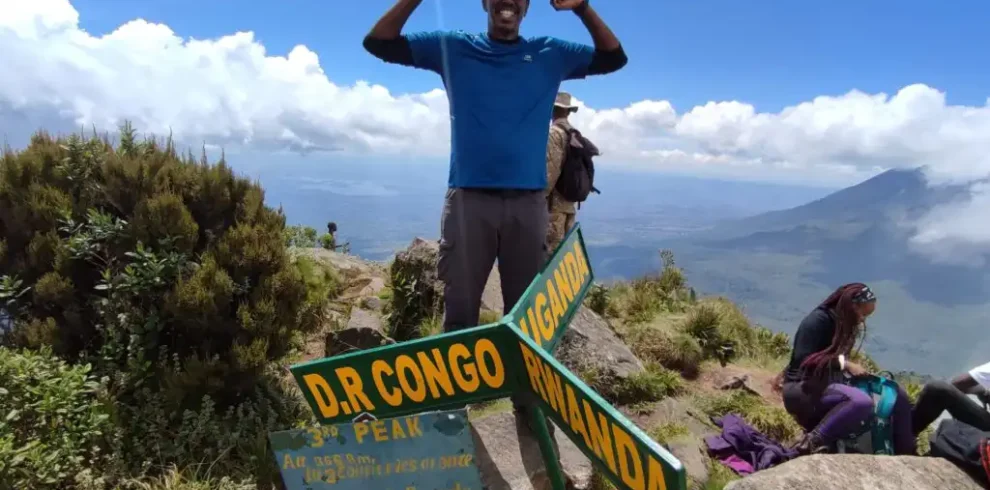
An Exceptional Cross-Border Safari Experience by BLS Safaris Ltd The 7-Day Masai Mara & Gorilla Trekking Adventure delivers an extraordinary journey that unites Kenya’s golden savannah plains with Uganda’s misty rainforest mountains. BLS Safaris Ltd designs this immersive expedit
Seven-day premium Tanzania fly-in safari with mobile luxury camps that follow the Migration through the Serengeti. Light-aircraft transfers, hot-air balloon, exclusive private guiding.
Eleven-day Tanzania safari and Zanzibar beach combination — full Northern Circuit game drives followed by four nights on Zanzibar. The complete Tanzania experience.
Six-day Tanzania safari following the Great Migration through the Serengeti — five game-drive days timed to where the herds actually are, plus the Ngorongoro Crater for Big Five close-outs.
Eight-day classic Tanzania Northern Circuit covering all four iconic parks — Tarangire, Lake Manyara, Serengeti and Ngorongoro Crater. The complete Tanzanian safari in one comprehensive trip.
Seven-day Migration safari timed to where the herds actually are — five days at strategically-placed camps for maximum Mara River crossing chances, plus a sunrise hot-air balloon and full-day cultural immersion.
Ten-day Kenya safari and beach combination — five days of Big Five Mara game drives followed by four nights of pure white-sand relaxation on Diani Beach. The classic Kenya wind-down.
Great Wildebeest Migration Month by Month
The Great Migration follows a broad annual pattern, but the exact position of the herds changes with rainfall and the availability of fresh grazing. This means the dates below should be treated as a practical planning guide rather than a fixed wildlife timetable. The migration usually concentrates on the southern Serengeti early in the year, moves through central and western Serengeti as conditions dry, reaches the northern Serengeti and Maasai Mara during the river-crossing period, then gradually turns south again with the return of the short rains.
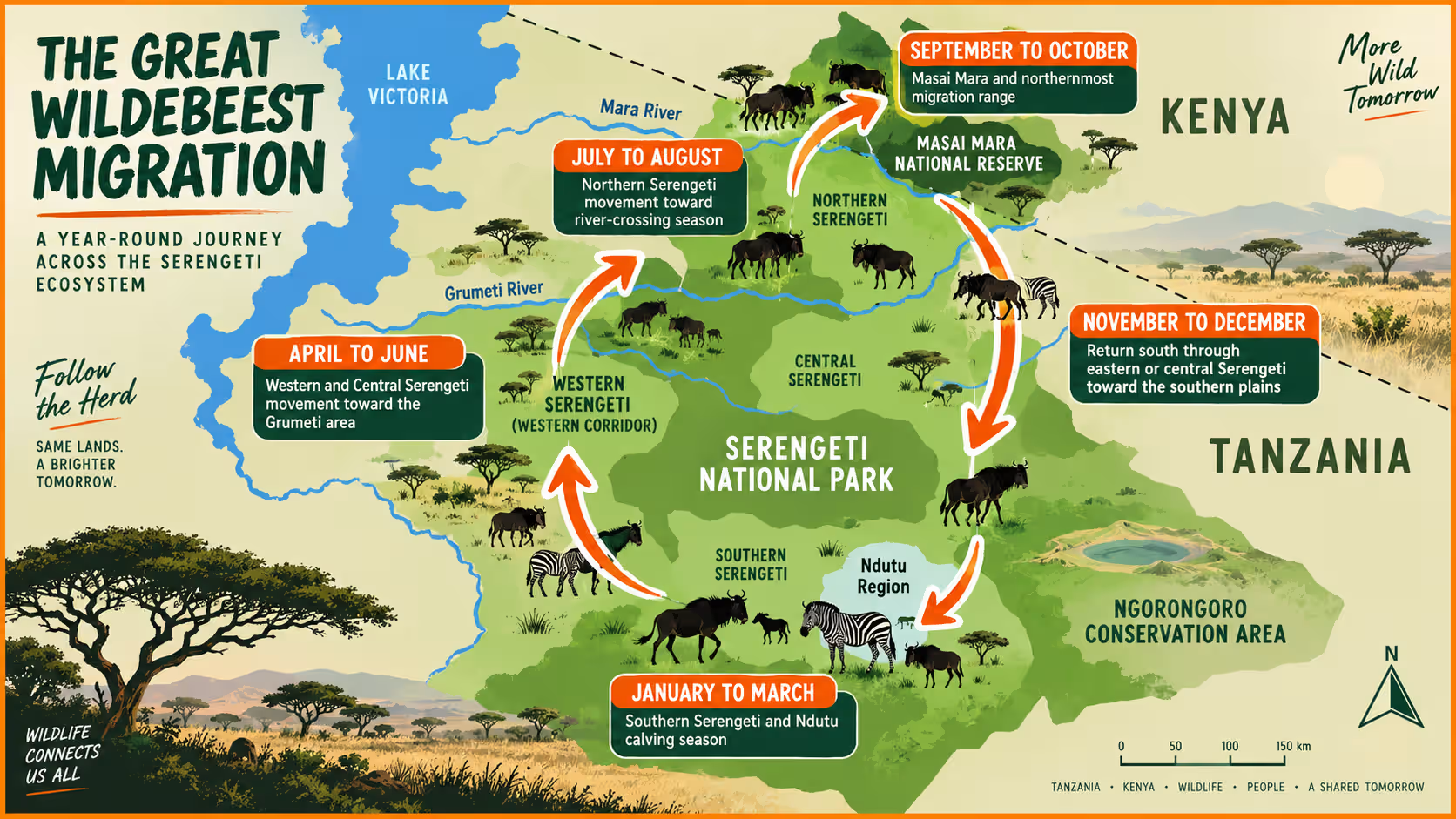
Wildebeest Migration map
January to March, Calving in Ndutu and the Southern Serengeti
From January to March, the Great Migration is usually concentrated across the short-grass plains of the southern Serengeti and Ndutu, extending towards the northern Ngorongoro Conservation Area. Fresh grazing following the short rains draws the herds into this region, with February generally the strongest month for calving. More than half a million wildebeest calves can be born within a few weeks, creating one of the most active predator periods of the migration as lions, cheetahs and hyenas follow the herds. For travellers visiting at this time, staying around Ndutu or the southern Serengeti is important. Being close to the herds reduces long daily drives and gives you more time to follow changing concentrations across the plains.
April to May, Central Serengeti and the Move North
In April, the herds begin leaving the southern plains as grazing conditions change, gradually spreading through central Serengeti and moving west and north. Some groups can remain farther south for longer, while others begin pushing towards areas around Seronera, Moru Kopjes and the western side of the park. By May, the movement becomes more noticeable as large herds continue towards the Western Corridor. This is one of the less predictable phases of the migration because rainfall can influence both the speed and direction of travel. For travellers, the main advantage is seeing the migration on the move rather than concentrated in one calving or river-crossing zone, with large columns of wildebeest and zebra travelling across the plains.
May to June, Western Corridor and Grumeti River
By May and June, much of the migration has moved into the Western Corridor of the Serengeti, where the herds spread through the grasslands around the Grumeti River as they continue north. The Grumeti River can create important crossing points during this phase, with wildebeest and zebras gathering along sections of the river before continuing through the western Serengeti. Nile crocodiles are present, adding another layer of tension when crossings occur. For travellers visiting at this time, staying in or near the Western Corridor reduces long daily drives and gives a better chance of following the herds as they move between grazing areas and river crossings.
July to October, Northern Serengeti and Mara River Crossings
From July to October, much of the Great Migration is usually concentrated across the northern Serengeti and Kenya’s Maasai Mara, with the Mara River becoming the main focus for travellers hoping to see a river crossing. The crossings are also the least predictable part of the migration. Herds can gather along the riverbank for hours, move away again or suddenly enter the water, and some groups may cross the river more than once as grazing conditions change between Tanzania and Kenya. For this reason, do not build a safari around one expected crossing time. Spending several nights in the northern Serengeti or Maasai Mara gives you more opportunity to follow herd movements and respond when activity develops along the river.
October to December, Return Through the Serengeti
From October into November, sections of the migration begin turning south from the northern Serengeti and Maasai Mara as changing rainfall creates fresh grazing farther south. Herds may move through the eastern and central Serengeti, including areas around Lobo and Seronera, but their exact distribution varies from year to year. The short rains usually return around November and December, gradually greening the plains and encouraging more animals to continue towards the southern Serengeti. By December, increasing numbers may be approaching the southern plains and Ndutu region, bringing the annual cycle back towards the next calving season.
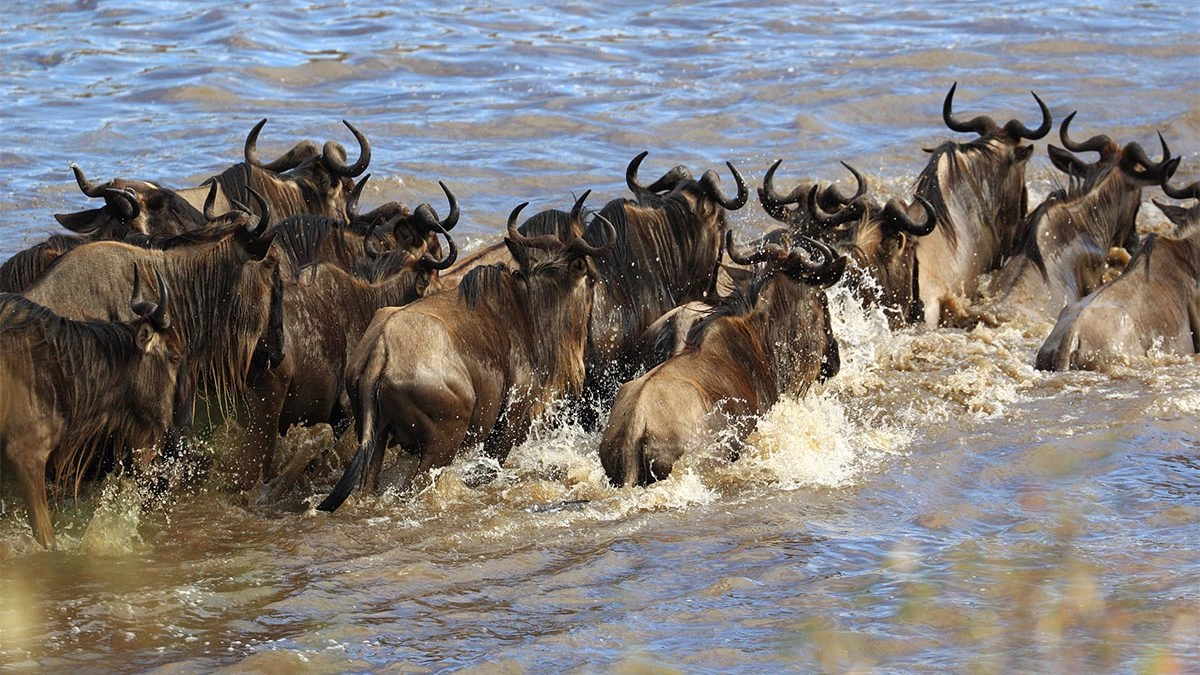
Masai Mara River Crossings
Serengeti vs Maasai Mara for the Great Migration
The Serengeti and Maasai Mara form one connected migration ecosystem, but they play different roles during the annual cycle. Serengeti gives travellers access to more stages of the migration, from southern calving grounds to the Western Corridor and northern river crossings. The Maasai Mara becomes most important during the northern phase, when herds move across the Kenya side of the ecosystem and gather around the Mara River. Your travel dates should therefore determine which destination receives the most time
| Factor | Serengeti | Maasai Mara |
|---|---|---|
| Migration presence | Covers most stages of the annual cycle | Mainly the northern migration phase |
| Best-known experiences | Calving, moving herds, Grumeti and Mara River crossings | Mara River crossings and concentrated northern herds |
| Typical timing | Different regions are important throughout the year | Broadly July to October for the main migration period |
| Best for | Travellers wanting to experience different stages of the migration | Travellers focused on the northern migration and river-crossing period |
| Where to stay | Base depends heavily on the month and Serengeti region | Stay close to the main Mara migration areas during the northern phase |
| Trip length | Works well for longer migration-focused Tanzania safaris | Can work well for shorter migration-focused Kenya safaris |
Best Time to See the Great Wildebeest Migration
There is no single best month for the Great Wildebeest Migration. The right time depends on which stage of the cycle you want to see. Calving, moving herds, Grumeti crossings and Mara River crossings happen in different parts of the Serengeti-Mara ecosystem, while rainfall can shift the timing from year to year.
| What You Want to See | Typical Period | Main Area | What to Expect |
|---|---|---|---|
| Calving and predator activity | January to March | Ndutu and southern Serengeti | Newborn calves, large herd concentrations and strong predator activity |
| Herds moving north | April to May | Central Serengeti | Widespread moving herds rather than one concentrated migration zone |
| Grumeti movement and crossings | May to June | Western Corridor | Herds gathering around the Grumeti area as they continue north |
| Mara River crossings | July to October | Northern Serengeti and Maasai Mara | River-crossing opportunities, although the exact timing cannot be guaranteed |
| Return south | October to December | Eastern and central Serengeti | Short rains, fresh grazing and herds gradually moving towards the southern plains |